
What I’ve Learned About Embedding Sustainability Into Business Decisions
 |
By Marine Sanouiller |
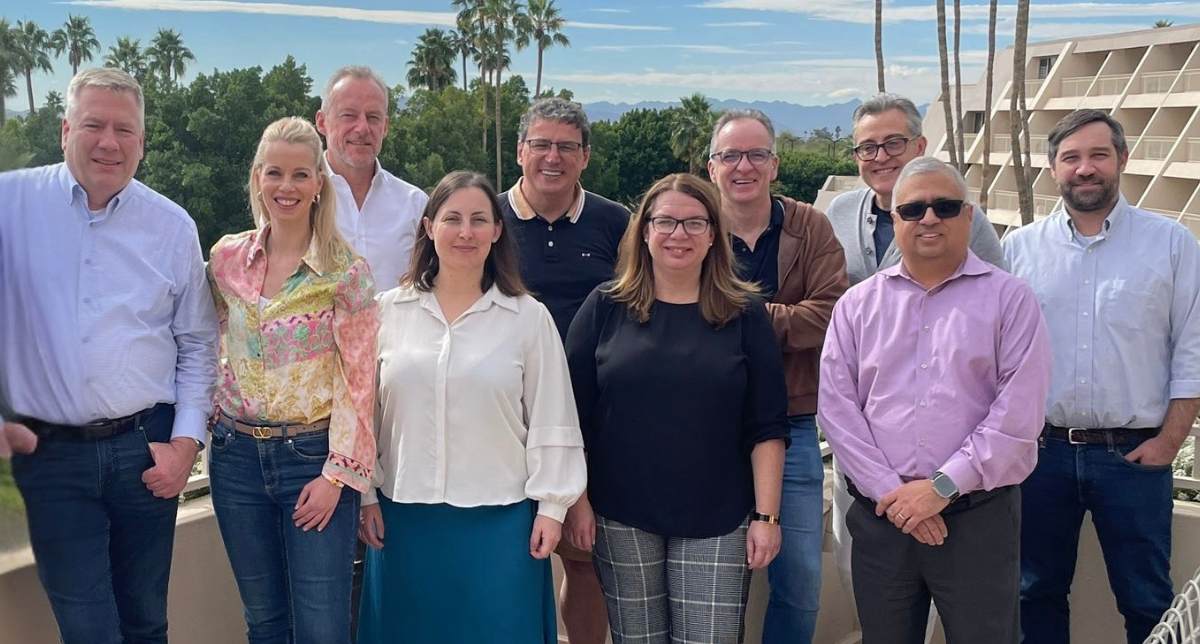
Marine Sanouiller, fourth from left, with fellow members of the Envu executive leadership team.
When I was first approached about leading sustainability at Envu, I had one condition.
If the role was simply about producing a sustainability report, I was not the right person for the job.
Reports matter. Transparency matters. But writing about sustainability is very different from changing how a company actually makes decisions. I was interested in the role only if sustainability could be embedded into the company’s strategy — into how we evaluate innovation, work with suppliers, strengthen resilience, manage risk, support our people, and prioritize investments.
Fortunately, that was the ambition at Envu as well.
That conversation shaped how I approached the role, and what I’ve learned since about making sustainability part of real business decisions.
Moving Beyond Reporting
Across industries, sustainability is still often treated primarily as a reporting exercise. Companies invest significant effort in collecting data, publishing disclosures, and responding to regulatory requirements. These efforts are important — but when sustainability lives only in reports, it rarely influences the decisions that shape a company’s future.
Innovation priorities remain unchanged. Supply chain choices follow the same logic as before. Investment decisions are made without considering long-term environmental or societal risks.
In those cases, sustainability becomes something companies describe, rather than something that actively guides how they operate.
For us, the starting point was different. As a newly independent environmental science company — focused on advancing healthy environments for everyone, everywhere — it had to be.
Before defining programs or metrics, we asked a fundamental question: Where can sustainability create meaningful value for our stakeholders and our business?
Start With Stakeholders
To answer that, we began by listening.
We conducted a double materiality analysis, engaging customers, suppliers, employees, and industry stakeholders to understand which issues matter most — and where we can make a meaningful and measurable difference.
The results were instructive.
Some priorities were environmental. Others centered around business ethics, supply chain resilience, employee well-being, and long-term trust. A large majority of our customers told us that responsible product and portfolio stewardship is a priority. At the same time, interest in decarbonization varies widely depending on geography and customer segment.
Understanding these differences matters.
Sustainability conversations often assume that every topic carries equal importance across teams and locations. In reality, priorities are shaped by how customers operate and the challenges they face in their markets.
For companies working in environmental science, that context is essential. Our solutions are used where society and nature intersect — protecting public health, safeguarding food supplies, and maintaining critical infrastructure.
Because of that, sustainability decisions cannot be made in isolation. They must account for the problems we are trying to solve together with our customers.
Turn Insights into Decisions
Listening to stakeholders is only the first step. The real challenge is translating those insights into decisions.
For us, that meant embedding sustainability into the systems that already guide our business, rather than creating standalone initiatives alongside them.
In innovation, we introduced a sustainability diagnostic into our governance process so teams can assess environmental, regulatory, and reputational implications early, when decisions can still shape outcomes.
The goal is not to slow innovation, but to ensure it remains viable over the long term and aligned with our customers’ evolving priorities.
We have taken a similar approach in procurement. Our teams assess supplier practices, conduct targeted audits, and work with partners on improvement plans focused on business ethics, employee well-being, modern slavery prevention, environmental performance, and supply chain resilience.
This type of supply chain due diligence helps reduce operational and reputational risk, strengthen long-term resilience, and build more trusted and future-ready partnerships across the value chain.
In both examples, sustainability becomes part of the decision-making framework, not a separate layer added afterward.
Over time, this changes how the organization operates. Sustainability is no longer owned by a single function; it becomes part of how teams make everyday decisions.
That is where sustainability begins to move from principle to practice.
The Reality of Trade-Offs
Embedding sustainability into decision-making also means confronting trade-offs.
Environmental science sits at the intersection of environmental protection, public health, and operational necessity. Customers depend on solutions that work reliably, safely, and economically, while expectations to reduce environmental impact continue to increase.
Balancing those realities requires careful judgment. It also requires sustainability priorities to stay aligned with broader business priorities, so the organization focuses effort where it can create the greatest long-term impact.
Take decarbonization. Reducing emissions is important and increasingly expected. But customer readiness varies. In some markets, sustainability improvements are strongly valued. In others, customers support the principle but cannot yet absorb the higher costs that inherently accompany it.
Recognizing that, we chose a phased approach: focusing first on actions that deliver immediate impact while strengthening business performance, and planning larger investments over time as capabilities, technologies, and market expectations evolve.
This allows progress without losing sight of economic reality. Sustainability should strengthen the long-term viability of the business, not create solutions that work in theory but fail in practice.
When sustainability is embedded into strategy, these trade-offs become part of normal business conversations. Leaders can weigh environmental and social benefits alongside cost, risk, and customer needs and make decisions that move the organization forward responsibly.
When Sustainability Becomes Embedded
The most meaningful shift happens when sustainability no longer requires constant oversight.
One of the milestones I’m most proud of at Envu has been seeing teams begin to integrate these considerations into their own decisions. Product teams, procurement leaders, and operational teams increasingly factor sustainability into how they assess risk, support their people, and prioritize actions.
That shift has strengthened culture, engagement, and long-term talent retention, while also contributing to Envu being recognized as a Great Place to Work® for two consecutive years.
In other words, the sustainability conversation is no longer confined to one function. It has become a shared compass for building a more resilient and forward-looking company.
Looking Ahead
Sustainability at Envu will continue to evolve as expectations, technologies, and regulatory environments change. No company has every answer, and progress rarely follows a straight line.
Many of the challenges ahead will also require collective action — across industries, supply chains, customers, and communities.
But one lesson has become clear: sustainability is most effective when it is connected directly to strategy and operations. When it helps guide decisions — rather than simply documenting them — it becomes a source of resilience, stronger governance, long-term trust, and business value.



.ashx?w=550)

