

Helping Customers Advance Mosquito Management Around the World
As mosquito-management challenges continue to evolve, Envu is helping customers bring together the science, solutions, technical expertise, and partnerships needed to respond.
Mosquito Management Is Becoming More Complex
Mosquito control is no longer just about reducing mosquito populations.
Professionals are increasingly being asked to manage resistance, respond to mosquito species appearing in new regions, address changes in biting behavior, reach hidden breeding sites, and deliver effective programs within tighter budgets. At the same time, changing climate and transmission patterns are altering when and where mosquito-borne disease risks emerge.
That means the strongest programs are rarely built around one product. They depend on choosing the right combination of tools, expertise, and interventions for the conditions at hand.
Starting With the Customer Challenge
The right mosquito-management approach depends on the problem customers are trying to solve. For some, that means reaching breeding sites that conventional treatments may miss. For others, it means managing resistance, improving application efficiency, strengthening prevention, or building a service program that works better for technicians and the communities they serve. Around the world, local Envu teams work with mosquito-management professionals, public-health authorities, and partners to understand their practical needs and help identify the right combination of products, technical support, training, and field expertise for their specific challenges.
“Our customers play an important role in environmental stewardship and protecting public health and communities every day,” said Gilles Galliou, CEO of Envu. “To be successful, they need innovative tools that work in diverse conditions, minimize impact to pollinators and ecosystems, and continue to evolve as threats from invasive pests and diseases evolve.”
For Envu, the goal is not simply to offer more tools. It is to help customers use the right tools more effectively.
This approach reflects the Envu sustainability roadmap, which translates the environmental and societal issues most material to the business and its stakeholders into action. Several tools highlighted in this article align with the Envu Nature-Focused Innovation pillar, underscoring the importance of balancing effective mosquito management with responsible environmental stewardship.
Expanding the Mosquito-Management Toolbox
Mosquitoes develop through multiple life stages and occupy environments that can be difficult to monitor or treat. Effective programs may therefore combine surveillance, source reduction, larval control, adult mosquito control, residual applications, resistance-management strategies, education, and community engagement.
The Envu portfolio reflects that need for different approaches.
One example is the In2Care® Mosquito Station, which uses mosquito behavior to carry active ingredients to breeding sites that may be hidden or difficult to reach. Instead of relying only on applications aimed at adult mosquitoes, the station gives professionals another way to intervene during the breeding cycle and complement existing services.
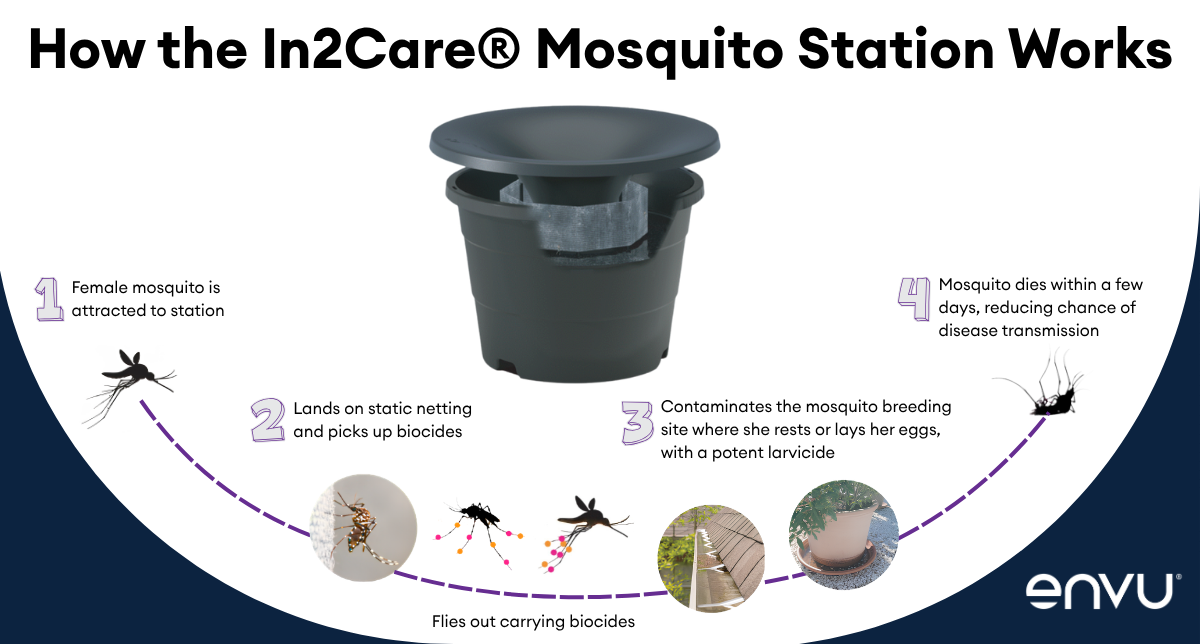
The In2Care® Mosquito Station uses mosquito behavior to help carry active ingredients to breeding sites that may be hidden or difficult to reach.
For pest management and lawn care customers, the practical value is just as important as the science. “We’re seeing huge growth in demand for nuisance mosquito control, particularly in private residential markets,” said Stephanie Lyons, Head of Portfolio Management. “The In2Care Mosquito Station answers that need with a highly visual, leave-behind solution that reassures customers and continues working between service visits. And, when used in combination with products like Barricor® Essential Mosquito Control or Suspend® PolyZone insecticide, it becomes part of a more powerful, integrated program for controlling mosquitoes in a sustainable way.”
The In2Care® Mosquito Station is currently available in the United States, Brazil, and additional select markets across Latin America, the Middle East, and Asia-Pacific. The role of Barricor Essential Mosquito Control within that broader toolbox is explored below.
Adapting Solutions to Local Needs
Other regional developments show how the portfolio continues to adapt to different mosquito species, operating conditions, and public-health priorities.
In July 2026, Envu introduced Barcelo® Liquid Film to the Brazilian public-health market at the 39th CONASEMS Congress, which drew more than 13,000 participants. The ready-to-use, silicone-based larvicide spreads across the surface of standing water, creating a physical barrier that controls larvae and pupae of Aedes aegypti, the primary mosquito vector of dengue. It can also be used in drinking-water containers, an important consideration in communities where stored water can become a mosquito-breeding site. By preventing larvae and pupae from developing into adults, Barcelo provides public-health programs with an additional mosquito-control option that works through physical rather than chemical action and does not contribute to insecticide resistance.
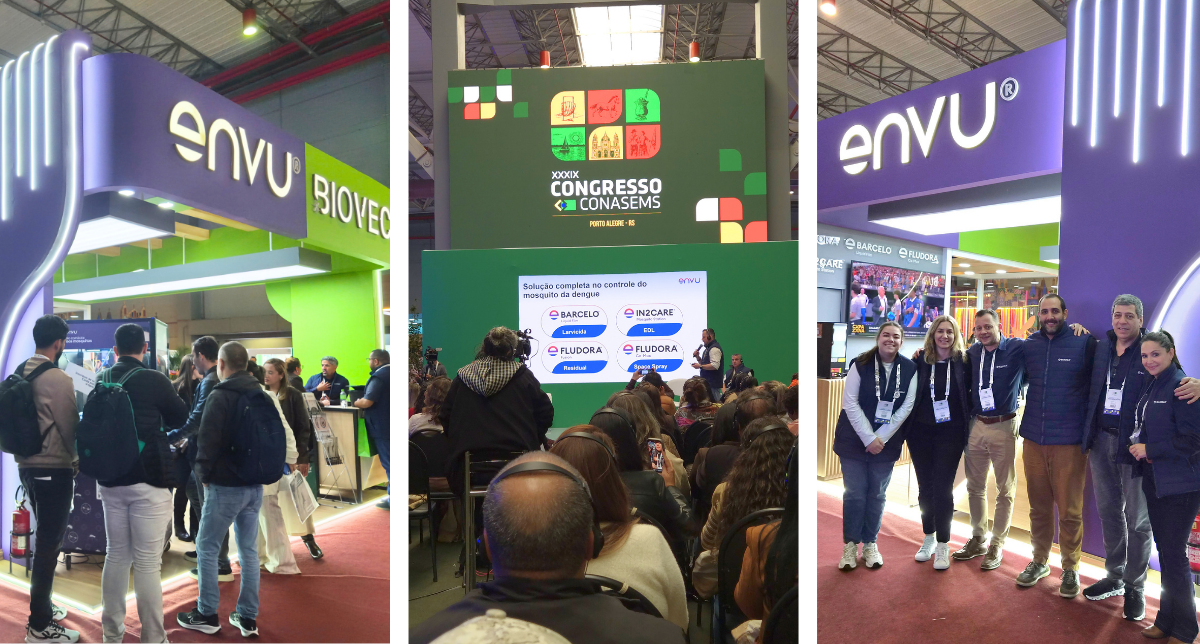
Envu showcased Barcelo® Liquid Film and other mosquito-management solutions at the 39th CONASEMS Congress in Brazil, engaging with public-health professionals and stakeholders from across the country.
In Türkiye and other select markets in Europe and Asia, Envu offers water-based space-spray formulations using FFAST® technology for professional mosquito-control programs. The technology helps droplets remain airborne longer, improving contact with adult mosquitoes.
In the United States, Barricor® Essential Mosquito Control provides another example of how the portfolio is responding to changing market demand. Launched in 2025 amid growing demand for plant-based and biologically derived options, the botanical product uses a combination of essential oils to effectively control mosquitoes while addressing customer expectations for environmental compatibility.
These solutions are not interchangeable, nor are they available in every market. Their value lies in giving customers more ways to build integrated vector-management programs suited to the mosquito species, environment, available resources, public-health priorities, and customer expectations in the markets they serve.
Making Proven Interventions Work Smarter
Innovation does not always mean replacing established approaches. It can also mean studying how proven interventions can be strengthened and helping customers apply them more effectively. Research involving Fludora® Fusion, for example, has demonstrated that its dual-action combination of deltamethrin and clothianidin can slow the development of insecticide resistance, helping preserve the effectiveness of indoor residual spraying over time.
Envu teams also support customers through informed product selection, application guidance, stewardship, and resistance-management expertise. Direct engagement in the field helps keep that support grounded in operational reality.
In Mozambique’s Matutuíne District, Envu colleagues recently joined public-health stakeholders at Bela Vista Provincial Hospital and a local indoor residual spraying (IRS) base to see how malaria surveillance, household follow-up, and spraying operations are carried out in practice. That kind of firsthand engagement helps Envu better understand the challenges customers and health systems face when turning malaria-control strategies into action.
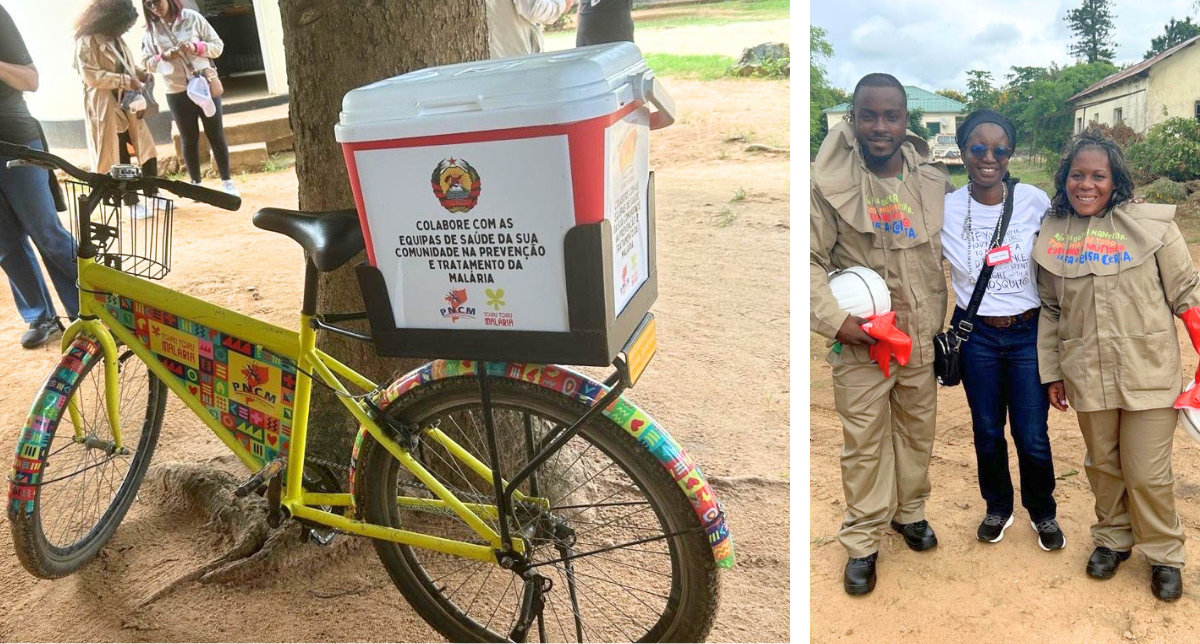
In June 2026, Envu colleagues joined public-health stakeholders in Matutuíne District, Mozambique, to learn how malaria surveillance and indoor residual spraying are implemented in local communities.
Turning Solutions Into Impact
Mosquito-borne diseases cannot be addressed through any single intervention or organization.
At the 9th Asia Dengue Summit in Singapore in June 2026, Su Yee Lim, Head of Solution Development for Mosquito Management, gathered insights on the evolving dengue landscape and shared key learnings with colleagues. One takeaway was the importance of looking beyond any single intervention and considering how vector control, surveillance, diagnostics, community engagement, public-health systems, and other approaches can work together.
In 2025, Envu products helped protect 3.7 million households from mosquito-borne diseases. That impact is possible because customers, public-health professionals, researchers, and partners work together to translate science and solutions into action in the communities they serve.
At the same time, the need to keep advancing this work is clear. Recent reporting on the rapid spread of Anopheles stephensi, an invasive, malaria-carrying mosquito that can thrive in urban environments, shows how quickly mosquito threats can change. Its spread across Africa, along with evidence of resistance to widely used insecticides, is creating new challenges for established control programs.
By continuing to listen to customers, expand the available toolbox, and collaborate across the mosquito-management ecosystem, Envu is working to meet those changing challenges and fulfill its purpose of advancing healthy environments for everyone, everywhere.
Related resources


