A Different Viewpoint on Mosquito Management: Reflections on the In2Care Mosquito Station Story
 |
By Gilles Galliou |
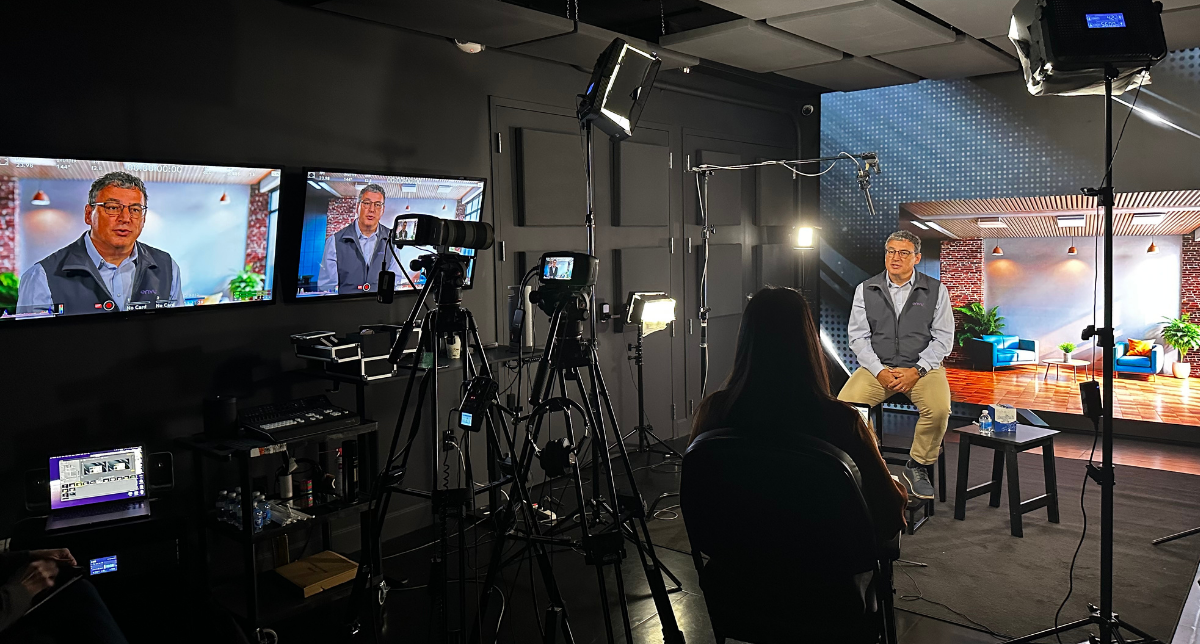
Recently, I found myself sitting under studio lights, waiting for a producer to tell me when to start talking about mosquitoes.
That is not a sentence I write often.
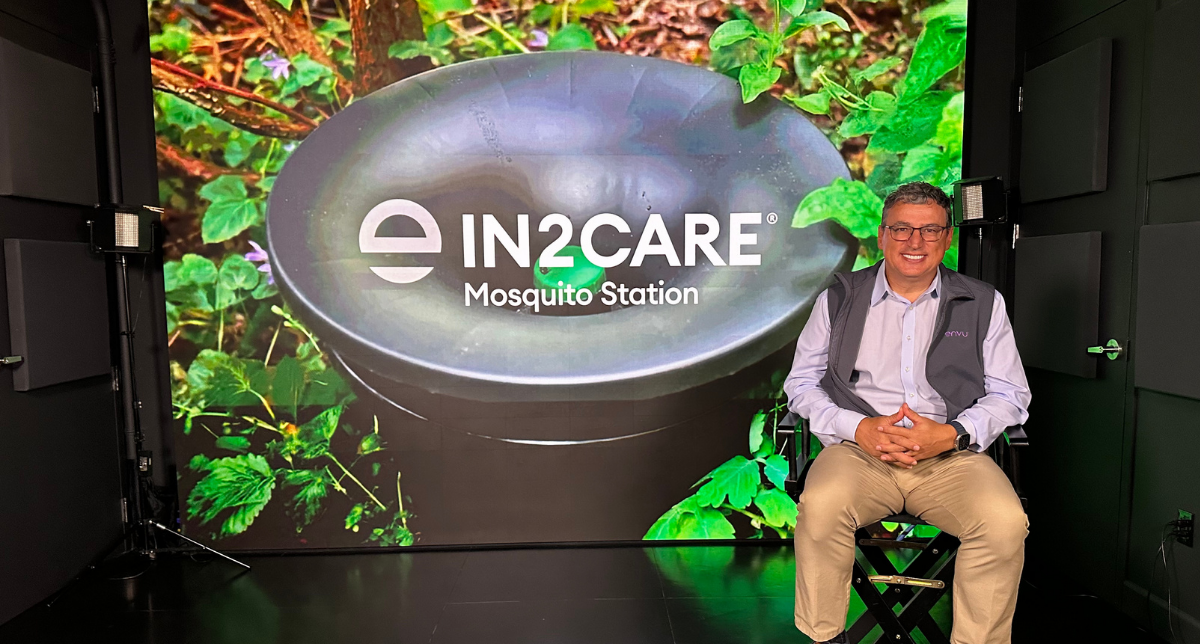
I’m referring to my participation in a TV segment that has been produced for the educational program Viewpoint with Dennis Quaid, which airs on Public Television affiliates across the United States. The segment focuses on mosquito management, public health, and the In2Care® Mosquito Station — an innovation that reflects how Envu continues to explore new approaches to prevention-focused mosquito management.
While I have spent much of my career working alongside customers, scientists, and other industry experts to advance environmental science solutions, participating in a professional television production was a first for me. From the makeup chair to the cameras to the bright studio lights, the experience gave me a newfound appreciation for the people who make television look effortless.
However, what struck me most about the experience was not the production itself. It was the opportunity to reflect on a lesson that generations of researchers, public health professionals, and mosquito management experts have reinforced time and again: the deeper our understanding of mosquito biology becomes, the greater our opportunity to develop smarter, more effective solutions.
Mosquitoes are remarkably resilient and capable of thriving in both humid and arid environments, and they continue to evolve alongside human populations. That adaptability helps explain why insects small enough to fit on a fingertip drive some of the world's most significant public health problems.
Vector-borne diseases transmitted by mosquitoes continue to affect communities around the world, especially in regions with limited public health resources. Malaria alone causes more than 600,000 deaths annually, most of them children under the age of five, while nearly half the world's population remains at risk of contracting dengue. These realities reinforce why developing better means of prevention remains such an important focus for researchers, public health professionals, and mosquito management experts alike.
Advancing the Science of Prevention
Decades of research have reinforced the importance of prevention-focused mosquito management. Source reduction, public education, targeted community treatment programs, and other proactive control measures remain some of the most effective tools available for limiting mosquito pressure and disease risk. At the same time, individuals have long relied on a variety of personal protection strategies — from window screens and insect repellents to citronella candles and insecticide-treated nets — to reduce mosquito exposure.
Those tools remain valuable. But as mosquito pressures continue to increase, resistance evolves, and climate conditions change, the environmental science industry must continue exploring new approaches that complement existing strategies and help address emerging challenges.
When Envu acquired In2Care in 2025, the In2Care Mosquito Station stood out as both a compelling product and a different way of thinking about mosquito management. It aligned closely with our belief that better solutions emerge when science helps us understand and work with natural systems rather than simply react to their effects.
What Makes the In2Care Mosquito Station Different
What initially drew our attention to the In2Care Mosquito Station was that it approached the challenge from a different angle. Rather than relying solely on finding and treating every potential breeding site, the technology leverages the mosquito's own behavior to help deliver control agents to places professional pest control operators may never see or reach.
The In2Care Mosquito Station helps control both Aedes and Culex mosquito species — two mosquito groups responsible for transmitting a range of significant vector-borne diseases. The station provides direct adult and larval control, helping reduce mosquito populations through multiple modes of action. For Aedes mosquitoes, the technology leverages their natural egg-
laying behavior to spread larvicide to additional breeding sites, extending control to locations that may otherwise be difficult to locate or access.
That targeted approach is one of the reasons the technology can be deployed in places where mosquito pressure presents serious challenges — from residential neighborhoods and school grounds to parks, zoos, and other public spaces. By focusing on mosquito biology and behavior, the system is designed to enhance mosquito control while minimizing impacts on people, pets, pollinators, and other non-target organisms.
It is a compelling example of how a deeper understanding of biology can create new opportunities for innovation.
Working With Nature, Not Against It
What makes innovations like the In2Care Mosquito Station exciting is not simply the technology itself, but what it represents: the opportunity to develop better solutions by deepening our understanding of the natural systems around us.
For me, it reflects the value of continuing to invest in science-driven innovation. As challenges evolve, so must the tools and approaches we use to address them. The In2Care Mosquito Station demonstrates how new ideas can emerge when we look at familiar challenges from a different perspective. The same mindset can be seen across other mosquito management innovations as well. Barricor® Essential Mosquito Control, for example, applies advances in formulation science to help overcome some of the stability and performance challenges that have historically limited mosquito control solutions based on essential oils and other botanical ingredients. While the technologies are very different, both innovations reflect a common belief: that better outcomes often emerge when we deepen our understanding of natural systems and apply science in new ways.
Whether we are addressing invasive species across pest and vegetation management, turf and landscaping challenges, or public health concerns, the next generation of innovation increasingly depends on finding new ways to apply what we’ve learned about the relationships between people, nature, and the environments we share.
At Envu, we describe this philosophy as being a force with nature. It reflects our belief that societal progress and environmental responsibility are not opposing goals. In many cases, they are most successful when pursued together.
Bringing the Story to Life
The opportunity to share the In2Care Mosquito Station story through the Viewpoint program reinforced the importance of helping people better understand both the challenges we face and the new technologies being developed to address them. Innovation can only create meaningful impact when people understand the problems it is designed to solve and how it can improve their lives.
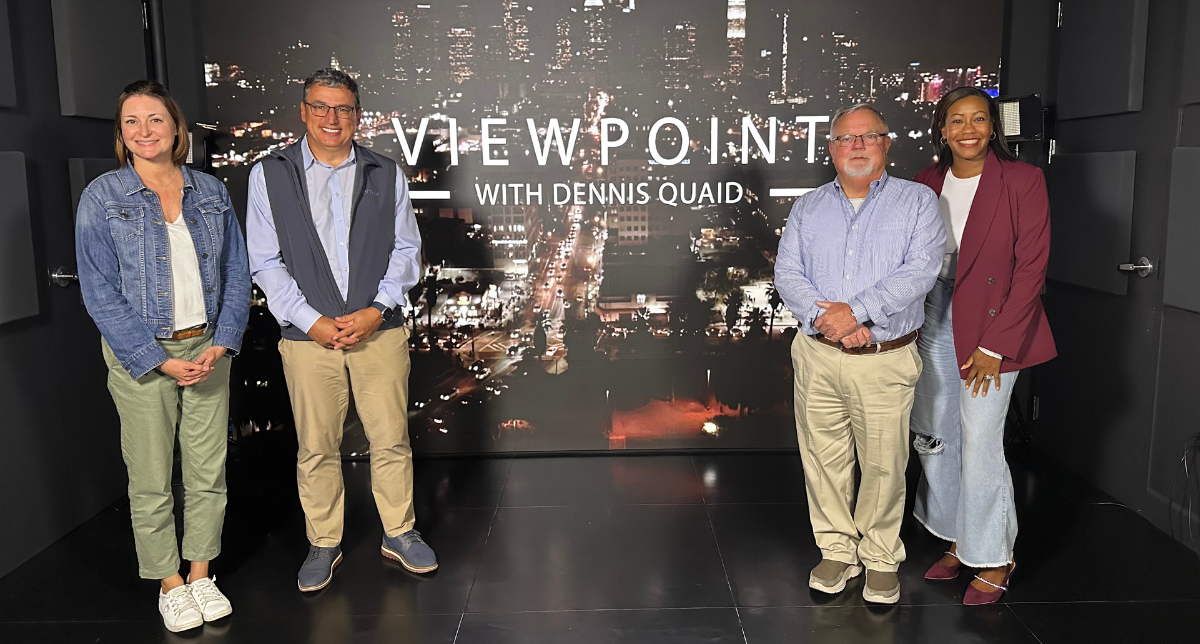
During production of the Viewpoint TV segment, I was joined by Envu colleagues Bekah Mahan, far left, and Brittany Bailey, far right, along with Billy Blasingame, second from right, who shared his perspective as a pest management professional.