

Smart Weeding System Earns Fresh Attention for Supporting Safer Rail Travel

Rail travel depends on more than trains, tracks, and timetables. Behind the scenes, vegetation management plays an important role in helping keep rail infrastructure safe, reliable, and resilient. A recent article in The Traveler highlights the Smart Weed System — the technology referred to by Envu as the Smart Weeding System (SWS) — and how it is helping rail partners in the United Kingdom take a more targeted approach to managing trackside vegetation. While SWS is often associated with rail-based trains, it is not a single vehicle or machine. It is a flexible technology platform that can be adapted to different rail maintenance vehicles, from full trains to smaller ATV-style platforms and road-rail trucks, depending on customer needs, network requirements, and local operating conditions. |
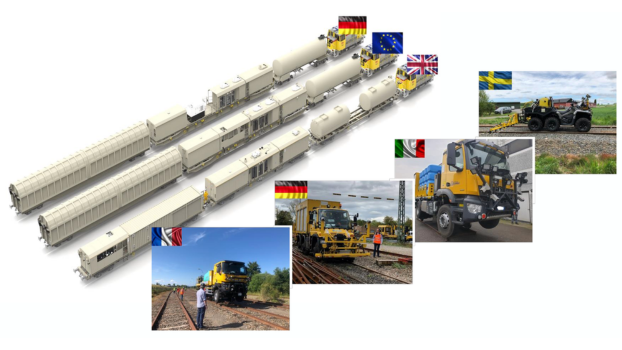
Smart Weeding System technology can be adapted across multiple rail maintenance vehicle platforms, including trains, road-rail trucks, and smaller ATV-style vehicles.
Precision technology for critical rail infrastructure
During operation, Smart Weeding System technology uses camera-guided detection, artificial intelligence, sensors, GPS-enabled controls, and precision spray equipment to identify live vegetation and apply herbicide only where treatment is needed. Within the track area, this targeted approach can help reduce herbicide use by up to 70%.
By replacing broad, preventive application with more precise intervention where appropriate, SWS supports more responsible management near waterways, sensitive habitats, and other areas where treatment should be avoided.
Beyond the application itself, the system also creates a digital record of where, when, and how treatments are applied, as well as where treatment was avoided. As The Traveler notes, vegetation analytics and smart spraying are increasingly seen as part of a broader layer of “infrastructure intelligence,” giving rail partners greater visibility to support traceability, planning, compliance, and long-term maintenance decisions.
For travelers, the work is largely invisible. But keeping vegetation under control helps support the clear, well-drained ballast and accessible track corridors that rail networks depend on for safe, reliable operations.
A proven innovation with renewed relevance
The Smart Weeding System has been developed and refined over several years, with real-world rail deployment beginning in Europe in 2018. Since then, the technology has continued to evolve across markets, helping rail partners manage unwanted vegetation, including invasive plant species, while adapting to different regional needs, vehicle platforms, and operating models.
Today, SWS is active across the UK, Germany, Sweden, France, and Japan, with related rail vegetation-management activity in Mexico. In Europe, SWS supports rail partners facing regulatory pressure and chemical reduction goals. In markets such as Japan, where recent implementation reflects growing interest in automation, the technology can also help address labor availability and worker-safety needs by reducing the need for people to be on or near rail infrastructure.
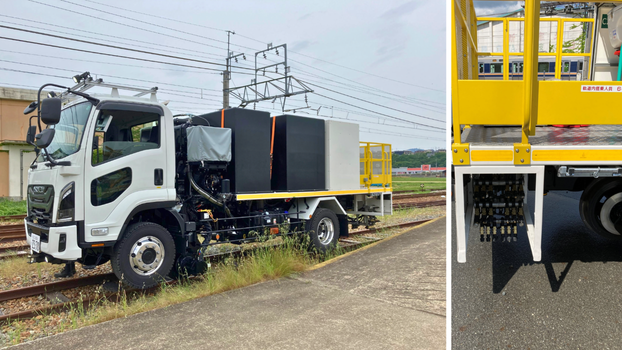
A recent SWS implementation in Japan uses a road-rail truck platform equipped with weed detection technology and automatic management of non-treatment areas.
In 2025, 54,000 kilometers of railways were protected using Smart Weeding System technology. Importantly, only half of that coverage required weed treatment, underscoring how the system helps rail partners identify where intervention is needed — and where it is not.
The innovation continues to demonstrate how environmental science, digital technology, and data can help address complex infrastructure challenges in the spaces where nature and society meet.
Read the full article in The Traveler for a third-party look at how Smart Weeding System technology is helping support safer, more reliable rail travel in the United Kingdom and beyond.
Related resources


